Planning
Where to stay in El Paredón: areas, prices and what to check
· 6 min read
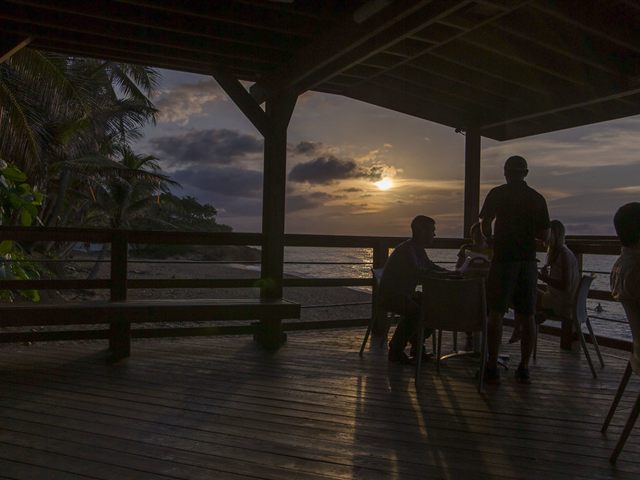
Stay on the beachfront to roll out of bed into the surf, in the village centre for shops and restaurants on foot, and on the quieter edges for space and privacy. In 2026, dorm beds run roughly $10 to $30 a night, private rooms about $40 to $100, and upmarket hotels and villas start around $130.
How is El Paredón laid out?
El Paredón is small: a few blocks long, one main sandy street running parallel to a long black-sand beach, and the mangroves and lagoons of the Sipacate-Naranjo National Park behind. One road into the village is paved; the rest is sand and dirt. Shops, minimarkets and most restaurants cluster in the centre, which is also where the shuttle stops. Beyond the centre, houses, lodges and villas thin out along the beach in both directions, and tuk-tuks cover the longer stretches.
Our shuttle from Antigua drops you at Super 24, in the middle of the village. For the return there are four pick-up points: Café de la Abuela, Super 24, Japi Mini Market and La Pecerita. When you compare places to stay, check which of them is closest. On a hot morning with a bag, five minutes’ walk or fifteen makes a real difference.
Beachfront: for surfers and sunsets
Sleeping on the sand is the classic El Paredón stay. You check the waves from a hammock, walk straight into the morning session and watch the sunset without moving. The sea breeze makes the nights a little easier too. Most of the surf hostels and lodges are here, with dorms, simple rooms and bungalows, often with a bar or restaurant open to non-guests.
The trade-offs: the social hostels on the beach are the ones with music in the evening, salt and sand get into everything, and the black sand in front of your room is hot enough at midday to burn bare feet. If you are a light sleeper, ask if your room is near the bar, or pick a lodge that describes itself as quiet rather than social.
The village centre: for walking everywhere
A few minutes inland from the beach, around the main street, you trade the sea view for convenience. The minimarkets, the ATM (when it has cash), most restaurants and the shuttle stops are all a short walk away, and rooms in small guesthouses are often cheaper than similar ones on the sand. It suits travellers who want a private room on a budget, or who will spend the day at a surf school and the evening wherever dinner looks good. The downside is less breeze, so air conditioning matters more here.
The quieter edges: villas, pools and longer stays
Further along the beach in either direction, away from the centre, are rental houses, villas and a handful of higher-end hotels, several with a pool and some with a kitchen. This is where families, groups of friends and people staying a week or more tend to end up. You get space, privacy and quiet nights. The cost is distance: the way back from the centre is dark and sandy after sunset, so plan on tuk-tuks or a headlamp, and check how far the place really is from the village and from your shuttle stop before you book.
How much does it cost to stay in El Paredón?
| Type | Per night (2026) | Good for | Ask about |
|---|---|---|---|
| Dorm bed in a surf hostel | $10 to $30 per person | Solo travellers, meeting people | Fan or air conditioning, lockers, noise |
| Private room in a hostel or guesthouse | $40 to $100 per room | Couples, light sleepers on a budget | Air conditioning, mosquito net, own bathroom |
| Upmarket hotel or villa | From about $130, much more for the best villas | Families, groups, slow stays | Pool, kitchen, distance to the centre |
Prices follow the seasons. December to April is the dry season and the busiest stretch, when weekends sell out first. The rainy months, May to October, bring bigger surf, lower prices and fewer people. Around Semana Santa and long weekends, the village fills with visitors from Guatemala City, so book as soon as your dates are fixed. More on choosing your dates in the best time to visit El Paredón.
What should you check before booking?
- Air conditioning. From December to April the nights are hot and still, and a fan room can be hard going. Not every room in a given place has it, so check the room type, not just the hotel.
- Hot water. It is rare in El Paredón, even in comfortable places. Showers are cool or lukewarm from sun-warmed tanks, which most people stop minding after a day on the beach.
- Wi-Fi. If you need to work, ask for a recent speed and whether there is a backup when the power drops in a storm, and carry a local SIM with data. Our practical guide has more on connectivity and money.
- Payment. Many small places prefer cash in quetzales, and card machines come and go. Confirm how you can pay before you arrive.
- Mosquitoes. They are worst at dusk, especially towards the mangroves, so screens or a net are worth asking about. Pack repellent; our packing list covers the rest.
- The name on booking sites. Some platforms list the village as El Paredón Buena Vista, or file it under Sipacate, the municipality it belongs to. Search for both.
Which area suits you?
- First trip, travelling solo: a surf hostel on the beach or in the centre, where lessons and dinner company are easy to find.
- Here to surf every day: beachfront, as close as possible to a surf school, so you can paddle out before breakfast.
- Couples: a private room with air conditioning, in the centre or at a quieter lodge on the sand.
- Families and groups: a villa or house on the edges, with a pool and a kitchen, and tuk-tuks for the evenings.
- Working remotely: anywhere that confirms a real connection in writing, ideally with a desk in the shade.
Wherever you stay, the shuttle gets you there: Antigua → El Paredón at 09:00 and 14:00 every day, about two hours, $25 one way or $45 round trip. Drop-off at a hotel in the beach area can be requested in the booking message and is confirmed with the operator. Book your seat.
Frequently asked questions
- Is it better to stay on the beach or in the village centre in El Paredón?
- On the beach if surfing and sunsets are the point of the trip; in the centre if you want cheaper private rooms with shops and restaurants on foot. The village is small, so neither choice leaves you far from the sand.
- How much does accommodation cost in El Paredón?
- In 2026, roughly $10 to $30 for a dorm bed, $40 to $100 for a private room in a hostel or guesthouse, and from about $130 a night for upmarket hotels and villas. Expect fuller places and higher prices from December to April.
- Do I need to book accommodation in El Paredón in advance?
- For weekends from December to April, Semana Santa and long weekends, yes. On weekdays in the rainy season, May to October, you can usually find something a day or two ahead.
- Do hotels in El Paredón have air conditioning and hot water?
- Many places have some air-conditioned rooms, but not all, so check the room type. Hot water is rare even in comfortable hotels; showers are usually cool or lukewarm.
- Can the shuttle drop me at my hotel in El Paredón?
- The standard drop-off is Super 24, in the village centre. Drop-off at a hotel in the beach area can be requested in the booking message and is confirmed with the operator before departure.